
Wash, cut and blow dry is among the best at reducing stress
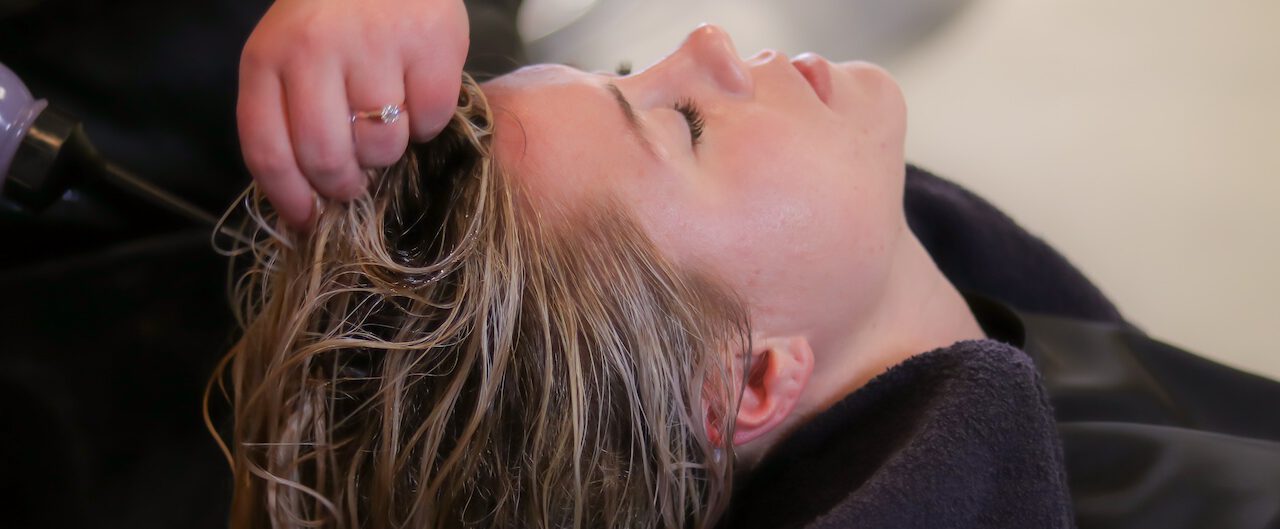
A wash, cut and blow dry is more effective than a deep tissue massage at reducing levels of psychological stress, according to a new study looking at stress and beauty treatments.
Ahead of Mother’s Day, Buyagift.co.uk tested the stress levels of top mummy bloggers, revealing the ‘most relaxing’ beauty and spa treatments according to science – and the results are surprising.
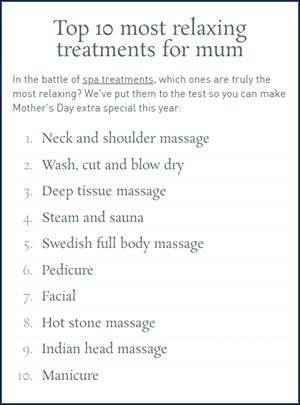
Having a back and shoulder massage came out on top, but surprisingly a wash, cut and blow dry came in second – beating eight other treatments.
Coming in third was a deep tissue massage, followed by a steam and sauna, and a Swedish full body massage.
Buyagift’s research found that over half of 2,000 UK mums are stressed out by getting the kids to leave the house for school and miss simple pleasures such as having a lie in, time to wash or the chance to use the loo in peace.
In response, Buyagift.co.uk launched a scientific study to determine which spa treatment had the most relaxing effect on busy mums by measuring the stress levels of ten top UK mummy bloggers.
‘Spa Wars’ – the mummy blogger experiment
Ten UK mummy bloggers were each given a spa treatment and asked to measure their stress levels – or Heart Rate Variability (HRV) – once during the most stressful moment of their day and again after their spa treatment. Buyagift then compared the different readings to determine the most improved stress rates and unveil which spa treatments truly reduce stress levels the most.
Dr Daniel Plews, Physiologist and Buyagift’s stress experiment consultant, said: “The survey reveals that mums need to take more time to relax as too little sleep and too much stress can have serious long-term physical and mental health implications.
“As four in five families don’t know which treatment to get their mother, this experiment was designed to reveal which treatments help mums de-stress the most by analysing mums’ stress levels.
“We did this by measuring HRV, which is an accurate, non-invasive measurement of the variation between consecutive heart beats intervals. It reveals signs of physiological stress, as HRV is typically higher (more variation between heartbeats) during relaxing activities and decreases (less variation between heartbeats) during stressful activities.”
The bloggers self-identified the most stressful moment of their day, which included mealtimes, homework and getting out of the door. The treatments tested in the experiment were the ten favourite treatments as determined by the survey of 2,000 UK mums.